


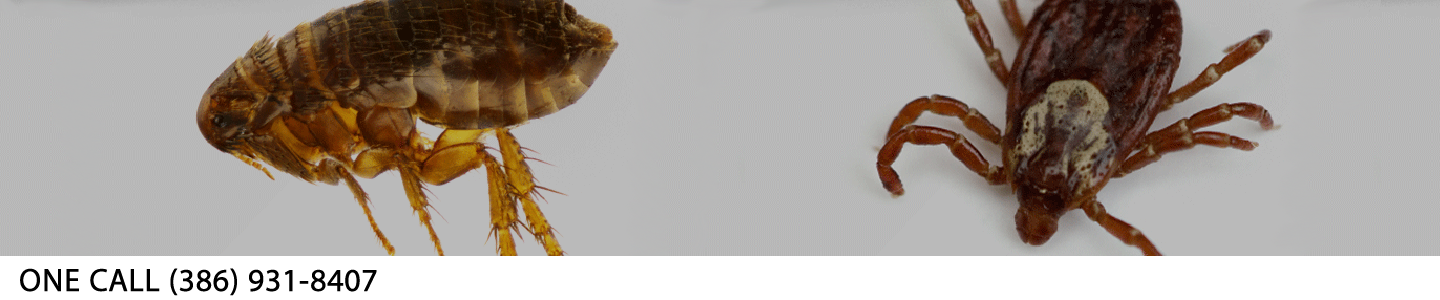
Both Fleas and Ticks are parasitic insects that survive by feeding on the blood of any warm-blooded body. It is not necessarily true that you need to have a cat or dog in order to have fleas and ticks in your house. Fleas and ticks can just as easily come into a house with the homeowners or guests. They may also come inside on new carpeting or other items brought into the house. Fleas and ticks may carry diseases like Lyme disease, typhoid fever or tapeworms that can make you (as well as your pets) very sick. Your pets could also develop allergies to flea saliva. Flea and tick infestations can be difficult to eliminate.
Fleas
The most common species is the cat flea, which often feasts on cats, dogs and humans. Fleas may also be carried on other, especially hairy, animals like rabbits, foxes, rats, mice and livestock such as pigs. They can also be found on shoes, pant legs or blankets, which can transfer the fleas to new environments. 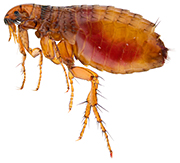
As parasites, the greatest concern about the presence of fleas in your home or business comes from their bites. Although these are not especially painful, they can result in an uncomfortable itch or rash.
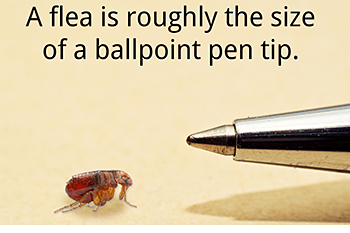
Fleas are quite hardy, and quite mobile. A flea can easily jump as high as three feet. As a parasite, they are a very high order of insect, and can lie dormant in all life stages. That means you can walk out of your flea-infested house, right this minute, not return for over two years, and then get hit with the very same fleas from two years before.
A flea will lay hundreds of eggs during its lifetime. Each egg can hatch and mature in as little as five days. That life cycle can continue from one to three months or until the infestation is treated.
Ticks
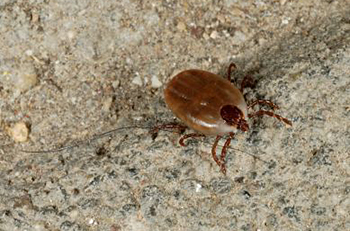
The Brown Dog Tick (the most common tick we see) can complete its entire life cycle indoors. Although it will feed on a wide variety of mammals, dogs are the preferred host in the U.S. and will develop into large infestations. Typically, a few ticks are brought into the house or 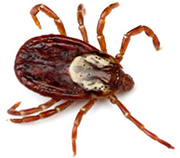 kennel, often on a dog that has been away from home. The early stages of the infestation, when only a few individuals are present, are often missed completely. The tick is found world-wide, but more commonly in warmer climates, and is present throughout Florida.
Why should you be concerned about ticks? Ticks are responsible for the transmission of many diseases to both humans and animals. Of all arthropods, ticks spread the widest array of disease-causing organisms. When ticks feed on human blood they are capable of transmitting diseases such as Lyme disease, Rocky Mountain spotted fever, Tick Paralysis and more.ill eat just about anything, including paper, hair, cloth
Our services include both Termites and Pests. The Termite department performs residential and commercial termite inspections and treats structures for infestations of wood destroying organisms. The Pest Control department provides residential and commercial integrated pest management, including prevention, exclusion, and pest control treatments.


Continuous, Long-Term Protection for Your Home - And Your Peace of Mind